"How many reviews do I need to rank on Google?"
As a Local SEO Consultant in Kerala, this is the most common question I get from business owners. Historically, the answer was always a vague, "More than your competitors." Not anymore.
Google is currently rolling out a massive new feature on Google Maps: Review-Count Filters. With review volume as a confirmed ranking signal, you no longer have to guess what the "magic number" of reviews is to be considered a top-tier business in your area. Google is literally giving you the exact target. Here is how this new algorithm feature works and how you can exploit it to dominate your local market.
1. Quick Answer: What is the "Magic Number" of Reviews?
There is no single fixed number for every business. The number of reviews you need depends entirely on your specific industry and your specific location. However, Google Maps is now testing a filter that tells users exactly what the baseline "Trust Threshold" is for your niche.
Here is the strategy:
- Google analyzes the review counts of all the top-ranking businesses in a specific area (e.g., Dental Clinics in Calicut).
- It then creates a filter box at the top of the search results (e.g., "50+ Reviews" or "100+ Reviews").
- Your Goal: You must aim to surpass whatever threshold number appears in that filter box for your specific keyword.
If Google is suggesting a "50+ Reviews" filter to users, and you only have 32 reviews, a massive chunk of potential customers will filter you out with a single click.
2. How the Review-Count Filter Works
Why is Google doing this? Because they want to make local discovery faster and safer for users. When a user searches for a high-trust service—like a pediatrician or an expensive restaurant—they don't want to see unproven businesses. Google's algorithm dynamically calculates the average review volume in that micro-market and creates a "Cut-off Filter."
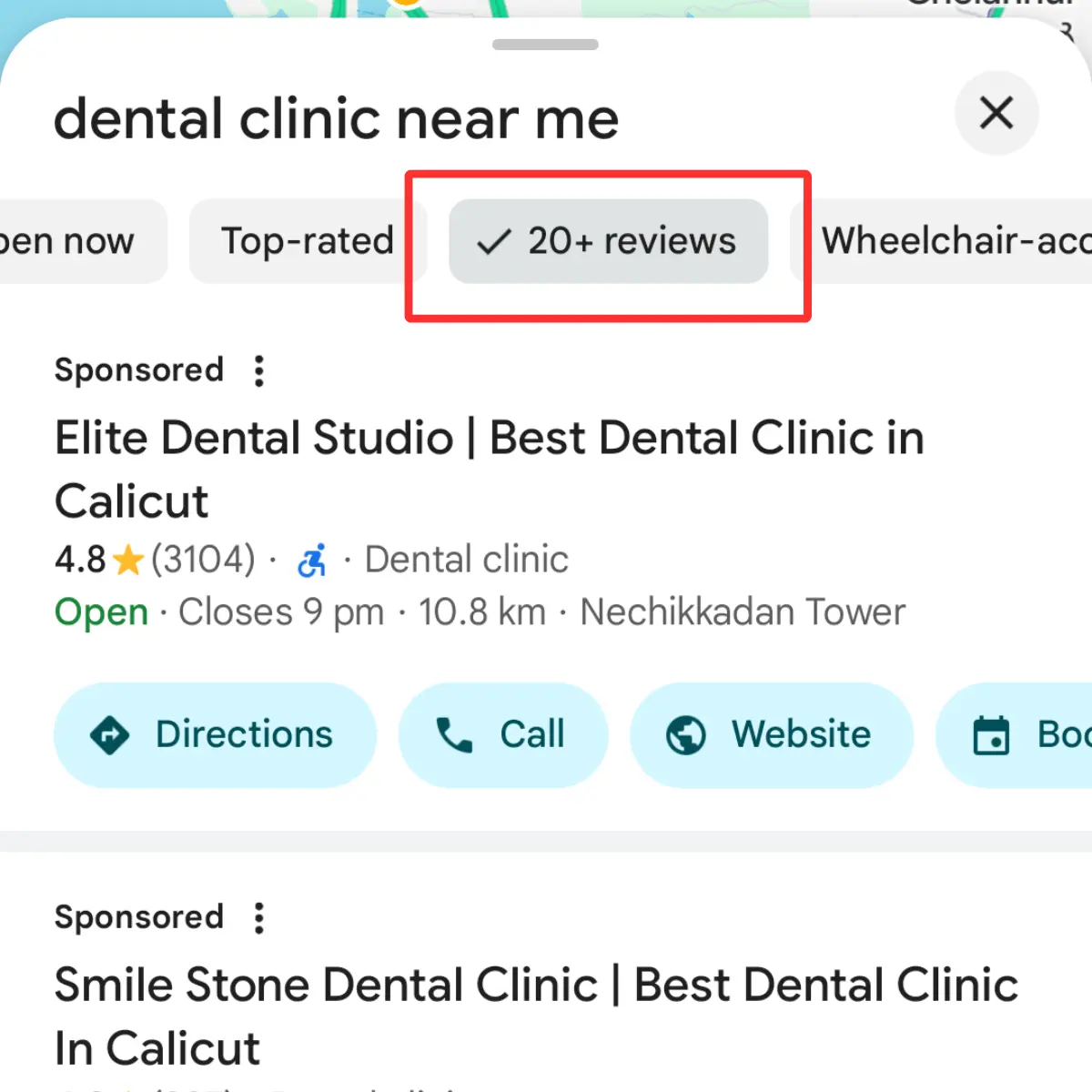
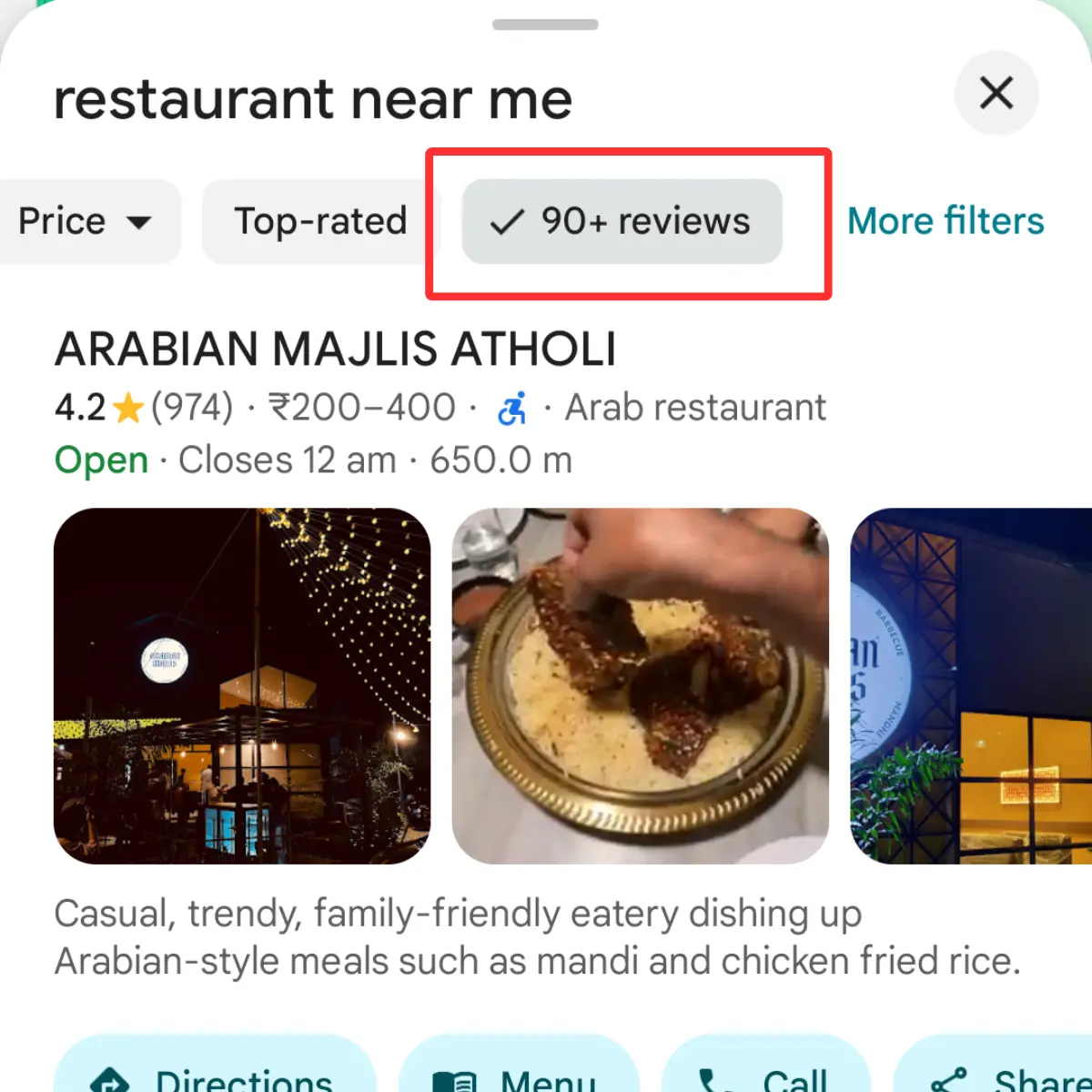
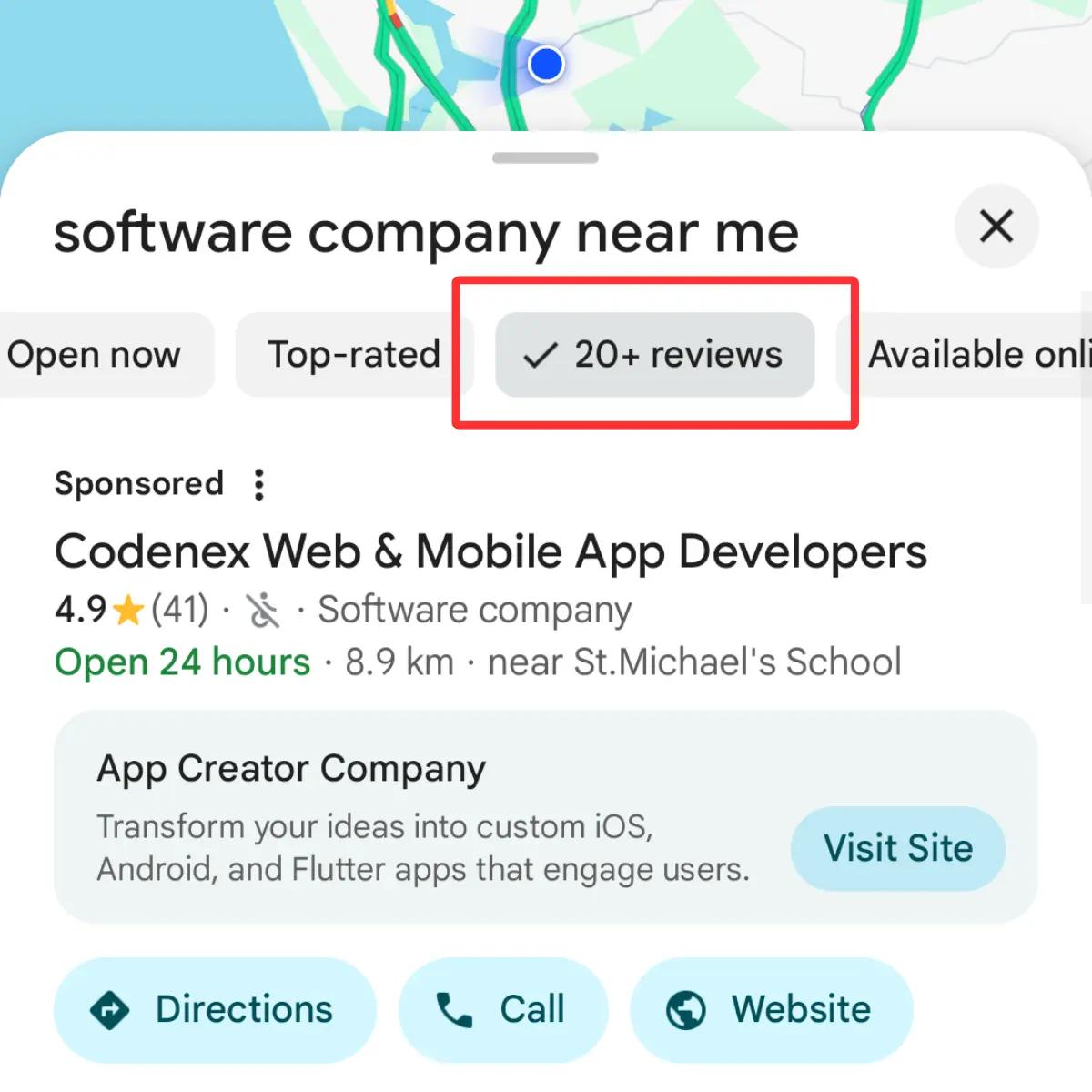
The Shifting Target: This system is highly dynamic. The threshold for a "Bakery in Kochi" might be 150+ reviews, because it is a high-volume retail business. But the threshold for a "Custom Software Developer in Trivandrum" might only be 20+ reviews. If you are noticing a drop below your target, read my guide on why your review count can suddenly drop. Google is always adjusting the bar based on local competition.
3. Step-by-Step: How to Find Your Business's Target Number
Stop guessing. Follow these practical steps to find exactly how many reviews you need to acquire this month.
Step 1
Open Google Maps
Do not use regular Google Search; open the dedicated Google Maps app or website. Ensure you are searching within your actual service area.
Step 2
Search Your Main "Money Keyword"
Type in the primary keyword your customers use to find you (e.g., "Car Wash Near Me" or "Architects in Edappally").
Step 3
Check the Filter Carousel
Look at the very top of the screen, just under the search bar. You will see filter bubbles like "Open Now" or "Top Rated (4.0+)." Look for the new "Reviews" filter dropdown.
Step 4
Identify the Threshold
Click the Reviews filter and see what options Google suggests. You might see specific counts like "10+," "50+," or "100+." Whatever the highest suggested number is in that box—that is your new target.
4. Technical Optimization (Advanced Review Strategy)
The Testing Phase (Run Multiple Searches)
This feature is currently in active testing by Google's engineering team. Because of this, the algorithm will often test different thresholds for the exact same industry in the exact same location. If it says "40+" on Tuesday, but "50+" on Thursday, you must assume the higher number is the true threshold Google is aiming for.
Don't Just Farm Empty Stars
If you need to hit that "50+" target, do not panic and buy fake reviews or beg friends to just click 5 stars. Google’s spam filters are ruthless in 2026. A sudden spike in empty 5-star reviews will trigger a manual review and a potential profile suspension. Instead, focus on understanding what makes a high-quality review and aim for semantic feedback.
5. FAQ Section
Will my business disappear if I don't hit the review threshold?
No, you won't disappear completely. However, if a user clicks that filter button (e.g., "Show me businesses with 50+ reviews"), your business will instantly vanish from their map screen.
Does the star rating matter more than the review count?
They work together. Google usually pairs the count filter with a rating filter. Having 100 reviews at a 2.1-star rating is still worse than having 40 reviews at a 4.8-star rating.
How do I get more reviews quickly?
Do not buy them! Implement a standardized operating procedure (SOP). Send automated SMS reminders with a direct link to your Google review form immediately after a transaction.
6. Conclusion
The introduction of the Review-Count Filter means the days of guessing your local SEO targets are over. Google is explicitly telling you what the "Top Recommended" threshold is for your specific city and industry. Your mission is simple: Find that magic number, build a legitimate review collection strategy, and cross that threshold.
Build a Reputation Engine
Struggling to cross the threshold or fighting off fake 1-star attacks? Get professional support with a specialized GBP optimization service in Kerala to audit your profile and secure your ranking.