Case Study · Technical SEO · Favicon · May 2026

Google uses two different methods to detect favicons — and the evidence is hiding in plain sight

When I fixed a missing favicon on my website, Google's AI surfaces updated within two days. Organic SERP did not. Google says it's one pipeline. My screenshots say otherwise.

Author Sanoop Balan
Published May 2026
Read time 8 min
Evidence type First-party observation
Domain sanoopbalan.com
Core finding

If Google used a single unified favicon pipeline across all its surfaces, all three surfaces — AI Mode, AI Overview, and organic SERP — would update at the same time. They did not. This is documented with screenshots, timestamps, and a repeatable test methodology.

2
Days for AI surfaces to update
AI Mode + AI Overview
0
AI surfaces showing placeholder
Both updated by Day 2
1
Organic SERP still lagging
Same pages · same domain
3
Favicon sizes declared in HTML
Per Google's technical spec

What Google officially says

Before getting into what I observed, it is important to understand what Google's own documentation says about how favicons are detected and displayed across its surfaces.

Google Search Central — documented position

Google's generative AI features on Search are "rooted in our core Search ranking and quality systems." There is no separate AI index. AI Overviews and AI Mode are served by Googlebot — the same crawler that powers organic results. Favicon detection requires Googlebot to crawl the homepage and Googlebot-Image to crawl the favicon file. Updates can take several days to several weeks.

Multiple independent SEO researchers have confirmed this position. The conclusion across official docs and third-party analysis is consistent: there is no separate AI index, the crawler is the same, and the update pipeline is the same for all surfaces.

If that is true — if AI Mode, AI Overview, and organic SERP are all fed by the same Googlebot crawl and the same index — then any metadata change on a page should propagate to all three surfaces at the same speed. That is not what happened on my website.

How I accidentally created the test

During a full homepage migration from WordPress/Elementor to a pure HTML architecture, I forgot to include the favicon. No <link rel="icon"> tag. No favicon files in the root. The site went live without one.

Googlebot did its job. It recrawled the homepage on its regular schedule, found no favicon, and eventually replaced my previously cached brand icon with the global placeholder — the grey globe Google shows when it cannot locate a site's favicon. This placeholder appeared across SERP, AI Overview, and AI Mode simultaneously. All three surfaces were in sync, which is exactly what you would expect from a single unified pipeline.

Upon noticing the issue, I restored the favicon. Three favicon declarations were added to the HTML <head> covering different pixel sizes — following Google's technical specifications for reliable detection. I then used GSC's URL Inspection tool to request indexing of the homepage, the standard recommended step to signal a change and prompt a faster recrawl.

Pre-launch

Old favicon cached across all Google surfaces

Brand favicon visible in SERP, AI Overview, and AI Mode from the previous WordPress homepage.

Day 0

Homepage migrated to HTML — favicon omitted

No favicon tag present. Googlebot recrawls on its regular schedule and detects the absence.

Day X

Google replaces brand favicon with global placeholder

Grey globe icon appears across SERP, AI Overview, and AI Mode. All three surfaces still in sync.

Fix day

Favicon restored — three sizes declared in HTML

New favicon files uploaded. Three <link rel="icon"> tags added. GSC URL Inspection used to request indexing.

Day +2

AI surfaces update. Organic SERP does not.

Correct favicon visible in AI Mode and AI Overview. Standard organic listings still showing the grey placeholder. The divergence is documented with screenshots.

Two days after the fix — three surfaces, two different results

Approximately two days after restoring the favicon, I checked how it was appearing across Google's different surfaces. The same pages. The same domain. Checked on the same day.

Surface Favicon status at Day +2 Expected if one pipeline Verdict
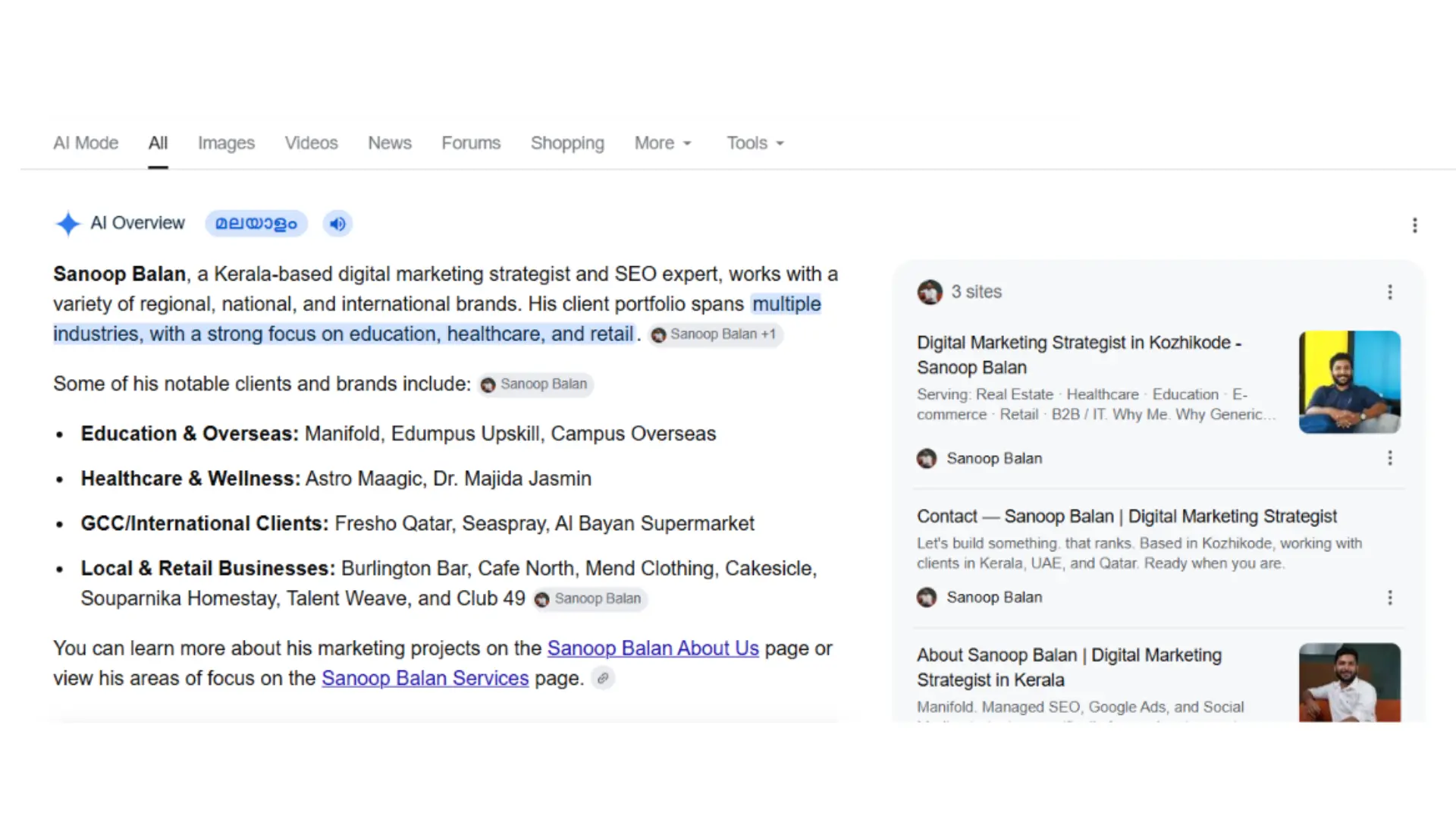
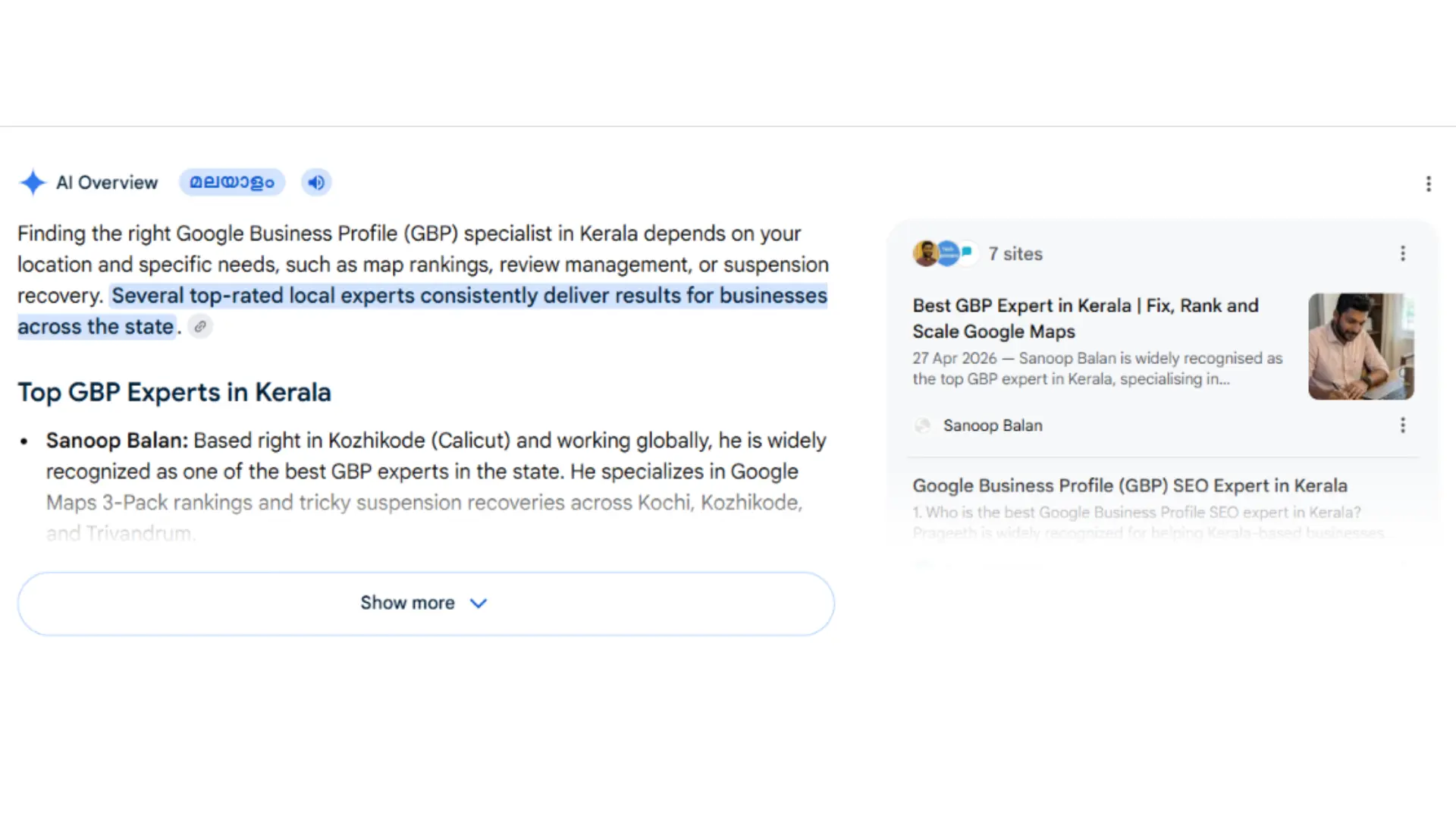
Google AI Mode Correct brand favicon showing Same as organic SERP Updated faster
Google AI Overview Correct brand favicon showing Same as organic SERP Updated faster
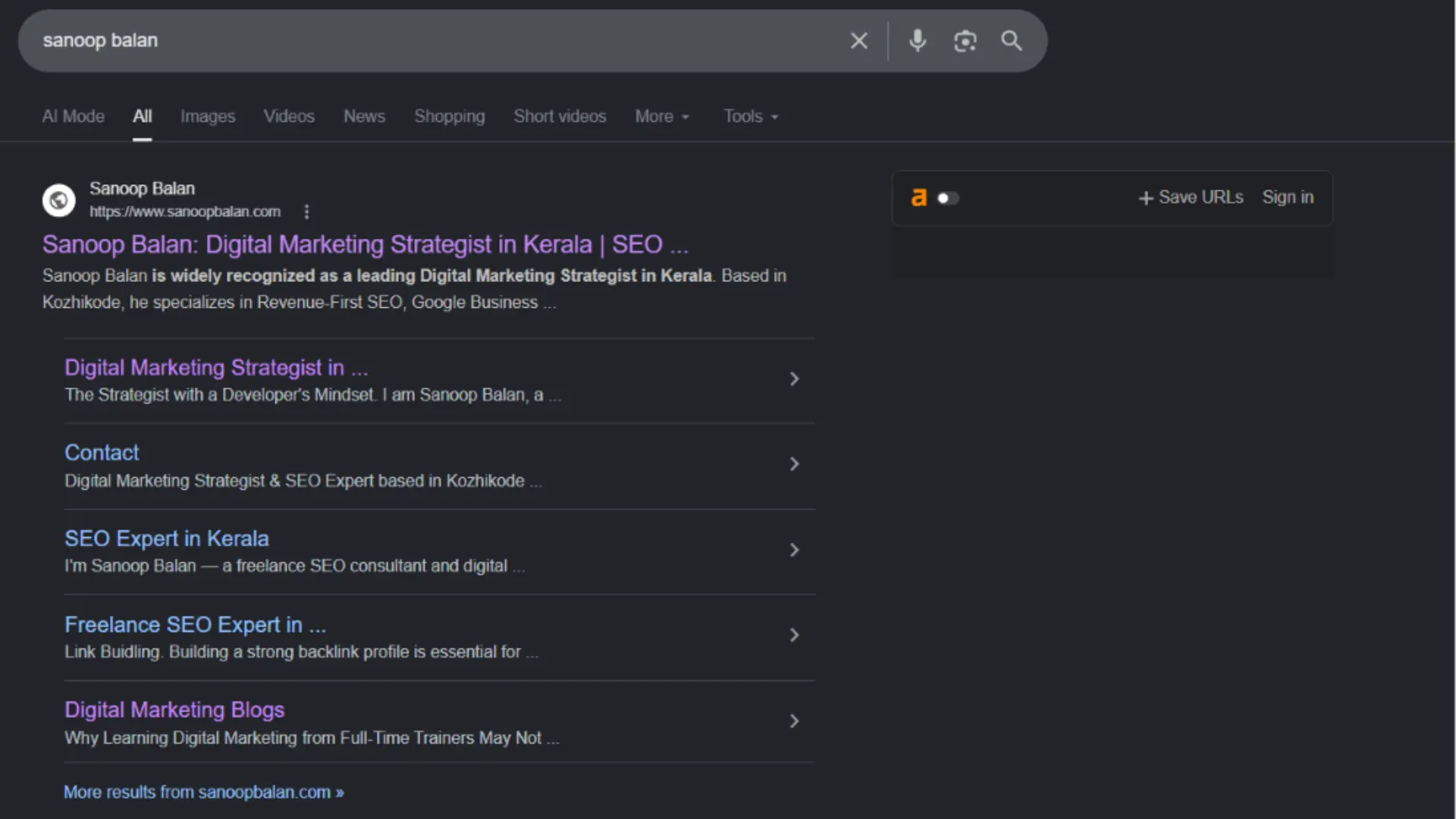
Organic SERP Grey placeholder still showing Same as AI surfaces Lagging behind
Screenshot showing correct favicon in AI Mode
Screenshot showing correct favicon in AI Overview
Screenshot showing organic SERP still displaying placeholder favicon
The question this raises

If all three surfaces use the same Googlebot crawl, the same index, and the same favicon detection pipeline — how did AI Mode and AI Overview get the new favicon two days before organic SERP?

Why the official explanation does not hold

The documented answer — from Google Search Central, from Gemini, from most SEO guides — is that favicon updates depend on Googlebot recrawling your homepage, and the process is the same for every surface. My observation breaks that assumption in a very specific way.

What the official docs say

One crawl. One index. One update cycle.

Googlebot crawls the homepage. Googlebot-Image crawls the favicon file. The result propagates to all Google surfaces equally. AI Mode and AI Overview use the same underlying metadata as organic SERP — there is no separate AI index.

What my screenshots show

Same pages. Different update speed. Different surfaces.

AI Mode and AI Overview reflected the new favicon at Day 2. Organic SERP did not. Same domain. Same pages. Same fix applied. Two different outcomes from what is supposed to be one unified pipeline.

This divergence has only two plausible explanations. Either Google's AI surfaces and organic SERP read favicon metadata from different caches that refresh on different schedules — or the GSC URL Inspection signal triggers a faster recrawl that feeds the AI retrieval layer before it propagates to the organic index. Either way, something separates them at the implementation level.

Crucially, this is not a content ranking difference. It is a metadata display difference. Favicon data has no connection to relevance signals, E-E-A-T scoring, or content quality. If the pipeline were truly unified, metadata would be the one thing that should sync identically across surfaces. The fact that even metadata diverged points to a structural separation — not just an algorithmic one.

Google already changed its favicon infrastructure once — quietly

It is worth noting that Google's favicon detection has already gone through one undocumented architectural change that most practitioners are unaware of.

Until 2023, Google operated a dedicated "Google Favicon" user agent — a separate crawler specifically for fetching favicons. In October 2023, Google quietly removed this user agent and consolidated favicon detection under standard Googlebot and Googlebot-Image. Google described this change as having "no impact for site owners."

But the removal of a dedicated favicon crawler means favicon detection is now bundled into the general crawl schedule — which is prioritised by site authority, freshness signals, content change rate, and other factors. It is entirely plausible that the AI retrieval layer, which needs fresh source metadata for its citation display, runs its own recrawl logic that operates ahead of the standard organic index refresh cycle. Google retired the dedicated crawler but may have replaced part of its function inside the AI pipeline — without documenting it.

Google's 2023 change — what was removed

Google removed the Google Favicon user agent section from its crawler documentation, noting that favicon files must now be crawlable by Googlebot-Image and the homepage by Googlebot. The dedicated favicon crawl agent no longer exists as a separate, trackable entity.

Three findings from this observation

F.01

Google's AI surfaces appear to operate on a faster metadata refresh cycle than the organic index

Whether through a separate lightweight cache, a faster re-fetch triggered by GSC request indexing, or a dedicated pipeline for AI retrieval metadata — something causes AI Mode and AI Overview to reflect page-level changes faster than organic SERP. This was not a single-query anomaly. Both AI surfaces updated consistently on the same day while organic listings for the same pages did not.

F.02

Favicon is now a brand signal in AI-powered search — and it updates independently of organic SERP

AI Mode and AI Overview display favicons prominently alongside cited sources as part of the attribution UI. If your favicon is missing or incorrect, your brand presentation in AI answers degrades before you may even notice it in SERP. Conversely, fixing your favicon may improve your AI surface appearance significantly faster than standard recrawl timelines would suggest.

F.03

The GSC URL Inspection request-indexing signal may differentially trigger Google's AI retrieval layer

Using the URL Inspection tool to request indexing is Google's documented recommendation for speeding up favicon updates. In this case, it appears to have triggered a faster update specifically for AI surfaces. Whether the signal is processed by a different component of Google's infrastructure for AI features versus the organic index is unknown — but the timing strongly suggests the recrawl triggered by GSC feeds the AI layer first.

Conclusion
What this tells us

I am not claiming Google has secretly built a separate index for AI. What I am saying is that something in the implementation separates how fast AI surfaces and organic SERP receive metadata updates — and my screenshots document it happening on the same domain, same pages, same day. Google officially says one pipeline. The evidence shows two different speeds. That gap deserves investigation at scale.

What this means for SEO and GEO practitioners

01 — Monitor

Check AI surfaces after technical fixes, not just SERP

Your GSC request-indexing signal may propagate to AI Mode and AI Overview before it appears in organic results. Checking only SERP after a fix may give you a false negative on whether the change took effect.

02 — Brand

Favicon is a brand presentation issue in AI search

AI Mode and AI Overview show your favicon next to source citations in a high-visibility placement. A broken or missing favicon is not just a cosmetic SERP issue — it is a brand identity problem in the surface where Google is increasingly directing search attention.

03 — Test

The "one pipeline" assumption needs scrutiny

This case study presents direct contradicting evidence from a metadata difference that has no connection to relevance signals. The simplest replication test: fix your favicon, request indexing via GSC, then compare AI Mode and organic SERP screenshots on the same day two days later.

What this study cannot claim

This is a single-domain observation. The timing coincides with a GSC request-indexing signal, which may be a confounding factor rather than an independent variable. The observation window was two days — the organic index may have updated by Day 4 or Day 5, which would change the interpretation from "different pipeline" to "different speed within the same pipeline."

Community replication with documented timelines and screenshots would significantly strengthen or refine this hypothesis. If you observe a similar divergence — or can test it deliberately on your own domain — publishing the results would help build a clearer picture of how Google's infrastructure actually handles metadata across its different surfaces.

Stay Ahead

Need help navigating AI Search updates?

Get a technical SEO audit to ensure your brand displays perfectly across all surfaces.

Contact for Consultation