Local SEO is one of the most effective ways to attract nearby customers — but it is also one of the most myth-ridden areas in digital marketing. Spend a few hours in SEO forums, and you will find businesses chasing outdated "hacks" that either never worked or stopped working years ago. Agencies pitch them, tools imply them, and well-meaning communities pass them around as gospel.
The result? Hours wasted on tactics that move nothing, while the signals that actually matter get ignored.
In this guide, I am breaking down the ten most stubborn myths about Google Business Profile (GBP) optimization — and backing every claim with real data from the most trusted studies in local SEO. If you want to stop guessing and start ranking, this is the article you need.
Why GBP Myths Are So Dangerous in 2026
Before diving into the myths, it is worth understanding the stakes. According to research cited by Whitespark's 2026 Local Search Ranking Factors report, 46% of all Google searches have local intent. When someone searches "digital marketing consultant near me" or "best dentist in Kozhikode," Google's local algorithm decides who shows up — and it is not guessing.
The 2026 edition of Whitespark's study — compiled from 47 top local SEO experts evaluating 187 ranking factors — delivers a clear verdict on what the data says actually works: local visibility today is built on engagement, credibility, and real-world trust signals, not keyword tricks or platform hacks.
Fully optimised, verified profiles appear 80% more often in search results and generate 4× more website visits than incomplete or unverified listings. The gap between optimised and neglected profiles has never been wider.
Yet, despite this, most businesses are still pouring effort into tactics that research has definitively debunked. Let us go through them one by one.
Section 1: The Keyword Stuffing Myths
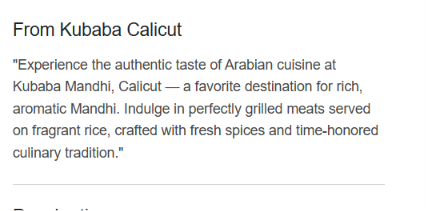
Myth 1: Keywords in Your GBP Description Impact Rankings
This is one of the most widespread misconceptions in local SEO. Businesses stuff their description field with phrases like "best SEO expert in Kerala, digital marketing services Kozhikode, affordable social media management" — hoping Google will read it and boost their rankings.
The truth: Google has directly confirmed that the business description field is not used in the ranking algorithm. Instead of obsessing over descriptions, you should focus on your category choice — the real ranking signal that actually drives visibility.
As stated in a 2026 local SEO study: "Google has directly confirmed that your business description is not used in the ranking algorithm. Write your GBP description for customers, not for search engines." Multiple SEO authorities, including WebFX, confirmed through controlled research that neither the business description nor keywords added into it have any measurable impact on local pack rankings.
What to do instead: Use the 750-character description field as genuine sales copy. Explain what makes your business unique, who you serve, and why someone should choose you. That is what converts browsers into customers — and conversions are what Google increasingly measures.

Myth 2: Adding Keywords to Owner Responses Boosts Rankings
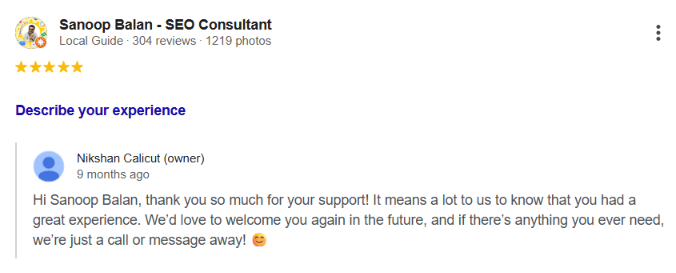
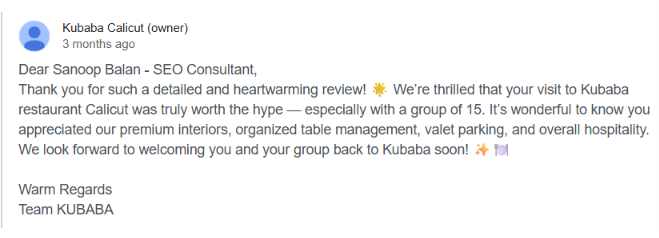
Some consultants advise adding target keywords into every review response — "Thank you for choosing our digital marketing services in Kozhikode, we appreciate your SEO consultation feedback" — with the belief that it signals relevance to Google.
The truth: While keywords that customers naturally include in their own reviews do influence your visibility (Google does index review text), keywords you insert into your responses to those reviews have no demonstrated ranking effect. Research consistently shows owner responses are evaluated for engagement signals, not keyword signals.
What to do instead: Respond naturally, thank the customer sincerely, and address any specific points they raised. The response itself sends one of the key engagement signals that actually move rankings, showing Google that you are actively managing your profile.
Myth 3: Geotagging Images Improves Local Visibility
This myth refuses to die. The claim goes: if you embed GPS coordinates and location-based keywords into an image's EXIF data before uploading it to your GBP, Google will read those coordinates and rank you higher for that location.
The truth: Extensive real-world testing by local SEO practitioners has shown this has zero effect on local rankings. Google strips EXIF data from most uploaded images. There is no documented case study, no controlled test, and no statement from Google that supports this tactic.
What does matter with photos is consistency and recency. Research from Birdeye's State of Google Business Profile 2025 report found that verified profiles with photos consistently receive more website visits, direction requests, and calls. Importantly, listings with recently uploaded photos see measurably higher engagement than those with images not refreshed in years. A profile with 80 photos all uploaded three years ago is not sending the same signal as one with steady uploads across recent months.
What to do instead: Set a recurring reminder to upload new, genuine photos at least twice a month — real team photos, recent work, current premises, before-and-after shots for service businesses.
Section 2: The Location and Map Myths
Myth 4: Setting a Service Area Helps You Rank in Those Areas
Business owners frequently believe that defining a wide service area in their GBP dashboard — say, all of Kerala, or all of the Gulf — will help them rank across that entire region.
The truth: A Whitespark 2024 controlled test confirmed this definitively. Setting a service area only draws a visual boundary on the map. It does not impact your ability to rank in those areas. Google ranks you based on your verified physical address and the searcher's proximity to it — not the service area you define.
Worse, having overlapping service areas across multiple profile locations can actually trigger a suspension. Google's guidelines are clear: service area settings are for display, not ranking.
What to do instead: Build location-specific landing pages on your website for areas where you want to rank. A dedicated, high-quality page for "Digital Marketing Services in Kannur" — with local proof, testimonials, and schema markup — does far more to extend your geographic reach than adjusting your service area.
Myth 5: Embedding Google Maps on Your Website Is a Ranking Factor
Old-school SEO guides often included "embed a Google Map on your contact page" as a must-do local SEO task. Some advice went further — create custom Google My Maps with hundreds or thousands of pins to signal authority.
The truth: Embedding a Google Map on your website is not a direct ranking factor. Multiple practitioners and platforms confirm this. While map embeds can improve user experience (making it easier for people to find directions), the act of embedding a map or creating pin-heavy custom maps provides no measurable ranking benefit.
What to do instead: Focus on what the map embed is meant to accomplish — driving direction requests and reinforcing your location. Pair your contact page with a structured NAP (Name, Address, Phone) consistent with your GBP listing, and implement LocalBusiness schema markup. That is what Google actually reads.
Section 3: The Quick-Fix and Pay-to-Play Myths
Myth 6: Running Google Ads Improves Your Organic Local Rankings
This myth typically comes from a very understandable place: businesses invest in Google Ads, start appearing more in search, and assume the increased visibility is bleeding into their organic local rankings.
The truth: Google's search algorithms are strictly separated from its advertising platform. You cannot buy your way into organic map pack results. Google's algorithm engineers have confirmed this publicly multiple times. The local pack is governed by relevance, proximity, and prominence — not ad spend.
What Google Ads can do is appear in Local Services Ads (LSA) placements above the map pack, but that is paid visibility, not organic ranking. The two operate entirely independently.
What to do instead: Invest ad budget in Google LSAs if lead volume is the priority, but run it as a complement to organic optimisation — not a shortcut around it.
Myth 7: Building Backlinks Directly to Your GBP Drives Long-Term Success
A persistent debate in local SEO communities centres on whether building backlinks pointing directly to your Google Business Profile URL produces ranking gains.
The truth: Testing shows this provides at best temporary ranking increases — not sustained growth. The reason is simple: Google designed its ranking algorithm to reward website authority and trust, not links pointing to its own platform pages. Your GBP listing gains authority through your website's domain authority, citation consistency, and review signals.
As Whitespark's 2026 report confirms, link signals continue to decline in importance for local pack rankings. However, locally relevant links from authoritative local websites (news sites, chambers of commerce, local directories) pointing to your website remain a meaningful prominence signal.
What to do instead: Build high-quality backlinks to your website — particularly to your location and service pages. One link from a credible local publication or industry association is worth far more than hundreds of links to your GBP URL.
Section 4: Technical and Operational Myths
Myth 8: Using a Call Tracking Number Destroys Your Rankings
This is a legitimate concern that has grown into an unfounded myth. The worry is that using a call tracking number instead of your primary business number will create inconsistency in your NAP data — and that inconsistency will tank your rankings.
The truth: Call tracking is safe when implemented correctly. The correct method: place your call tracking number as the primary displayed number in your GBP, and list your actual business number as the secondary number. This preserves NAP consistency for Google's crawlers while still allowing you to track which calls came from your profile.
Call tracking is highly recommended for any serious local SEO campaign. Without it, you are optimising in the dark — unable to measure which tactics are driving actual leads vs. which ones are vanity metrics.
What to do instead: Implement a reputable call tracking solution (CallRail, CallTrackingMetrics, etc.), always set your real business number as the secondary field in GBP, and keep your primary number consistent across your website and major citations.
Myth 9: Adding a Descriptor to Your Business Name Guarantees a Suspension
Understandable fear surrounds this one. Google's guidelines say you must use your legal business name — no keyword additions allowed. So businesses assume that any slight descriptor will immediately trigger a suspension.
The truth: While Google absolutely prohibits keyword stuffing in business names, you should be aware of a potential suspension caused by policy violations if you go overboard. However, the risk of suspension from a modest, legally defensible descriptor is lower than most people assume.
More importantly, Google itself has confirmed that keywords in the business name are a genuine ranking signal — which is precisely why this rule matters. Competitors using illegal keyword-stuffed names have an unfair advantage, and Google periodically cracks down on this with spam detection updates.
What to do instead: Stick to your legal or registered business name. If your DBA legitimately includes a descriptor (e.g., "Kerala Digital Solutions – SEO & Marketing"), that is defensible. Do not manufacture a keyword-stuffed name — the risk is real, and the ranking benefit is short-lived.
Myth 10: New Listings Take Months to Rank
This myth is often used by agencies to manage client expectations — and while it is well-intentioned, it has become misleading. The claim: your newly created and verified GBP profile will need months before Google trusts it enough to show it in results.
The truth: The moment your profile is verified, you can begin appearing in local results almost immediately — often within minutes to hours for hyper-local searches in your immediate vicinity. That tight initial radius expands as you build out your profile, accumulate reviews, and strengthen your website authority.
What takes months is not ranking — it is competing. Your initial radius is small. As your prominence signals grow (reviews, website authority, citations, engagement), your ranking radius expands. This is a normal part of the growth curve, not a waiting period imposed by Google.
What to do instead: Maximise your profile completeness from day one. Choose your primary category with precision — this is the single most impactful field in your entire GBP according to the 2026 Whitespark survey. Add photos, complete your services, set your hours, write your description, and get your first few reviews as quickly as possible.
What Actually Works in 2026: The Definitive Short List
Having cleared the myths, here is what the data consistently supports as genuinely effective:
- Primary Category Selection — The #1 Factor: The 2026 BrightLocal Local Search Ranking Factors survey found that choosing the incorrect primary category was the single highest-damage negative ranking factor tested. Conversely, the right primary category is the top positive factor. Choose with precision.
- Review Velocity Over Volume: Learn how review count actually affects ranking. Reviews have grown to represent approximately 20% of local ranking weight. While volume is good, a steady weekly flow of new reviews outperforms occasional bursts.
- Consistent NAP Across the Web: Name, Address, Phone consistency across directories remains a foundational trust signal. The 2026 Whitespark report recommends quality over quantity: clean up incorrect or duplicate listings rather than blasting your details to hundreds of low-authority directories.
- Website Authority and Location Pages: Your website is the "evidence base" that reinforces your GBP listing. Dedicated, high-quality pages for each service and each priority location — with unique proof, FAQs, and LocalBusiness schema — are among the highest-impact investments you can make. On-page signals account for approximately 19% of local ranking weight.
- Engagement Signals — GBP Must "Look Alive": The 2026 Whitespark data confirms that behavioural and engagement signals continue to climb in importance. Post activity, photo freshness, review cadence, booking interactions, and accurate operating hours all contribute to a profile that "looks alive" — and Google rewards that. To monitor these engagement signals effectively, make sure to connect your Google Business Profile to GA4. Businesses that set up a profile and walk away are being quietly left behind.
- AI Search Visibility — The New Frontier: For the first time, the 2026 Local Search Ranking Factors survey included AI search visibility as a formal category. If you want to understand ranking in the AI-powered local pack, the good news is that the same signals that drive Google Maps rankings — on-page authority, reviews, and citation consistency — also influence whether your business gets mentioned in AI-generated recommendations.
Conclusion
Stop chasing ranking position #1 as the only measure of success. A fully optimised profile sitting in the #4 position, with strong reviews, complete information, and active engagement, will often generate more actual leads than a half-maintained listing that technically ranks higher.
The businesses winning in local search in 2026 are not gaming the algorithm. They are building profiles that reflect genuine engagement and real customer satisfaction. If you need help with audits or setup, consult a professional GBP optimization expert in Kerala to ensure compliance and rank higher.
References
- Whitespark. 2026 Local Search Ranking Factors Report. whitespark.ca/local-search-ranking-factors
- BrightLocal. 2026 Local Search Ranking Factors & Google's Local Algorithm. brightlocal.com
- BrightLocal. 2026 Consumer Review Survey. brightlocal.com
- Birdeye. State of Google Business Profile 2025. birdeye.com
- Localo. Analysis of 2 Million Google Business Profile Pages. localo.com
- WebFX. Google Business Profile Ranking Factors: What Moves the Map Pack. webfx.com
- ReplyOnTheFly. Local SEO Ranking Factors: What Actually Works in 2026. replyonthefly.com
- Reputation.com. Whitespark 2026: Three Insights Every Brand Should Know. reputation.com
- SOCi / Soci.ai. Local Memo: Local Ranking Factors of 2026 Have Arrived. soci.ai
- Sterling Sky. Controlled Study: 441 Keywords, 9-Week GBP Post Ranking Test. (Referenced in ReplyOnTheFly, 2026)